
Recently, I was taken aback by the outpouring of remembrances on Twitter that followed the death of the great Colombian author Gabriel García Márquez. This was the passing of a true legend, the kind of person whose death really made me stop and think as few celebrities can. I’ve long since grown accustomed to seeing such occasions marked by a bevy of tweets, but I can’t recall ever having seen my Twitter feed so thoroughly monopolized by tributes to just one figure. Momentarily, the haphazard, far-flung collection of people I happen to follow were virtually united in mourning the passing of a colossus, a miraculous writer who had spoken to them deeply.
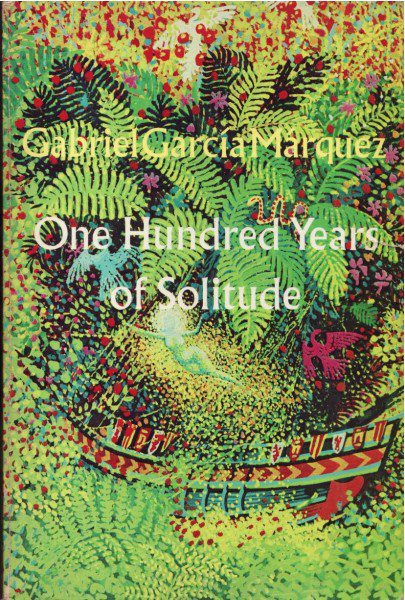
Unsurprisingly, virtually all of the tweets were made in English, by people who had probably read García Márquez in this language. Seeing them, I instinctively recalled what the man himself had famously told his translator Gregory Rabassa, who brought into English his masterpiece, One Hundred Years of Solitude: García Márquez told Rabassa that his translation was better than the original.
Amazing! One Hundred Years of Solitude was the rarest of novels, a staggering, towering inspiration that helped create a new kind of literature, that re-introduced an entire continent to the rest of the world, and that ensured García Márquez’s Nobel Prize in 1972. Not only that: it filled the minds of millions upon millions of readers. And here García Márquez was telling Rabassa that he had actually improved upon his work.
Could such a book ever have been written originally in English? I seriously doubt it. One Hundred Years of Solitude comes from a very special place and time, and it’s informed by the experiences of a man who was first and foremost a Latin American. That fact that this great Spanish-language work was somehow transmuted into an equally special English-language work speaks to the sort of unique, amazing things that can only happen in the world of translated literature.
 I work for Two Lines Press, a nonprofit publisher dedicated to publishing translated literature, and it’s the thrill of discovering voices like this—and getting them out into the world—that makes this job so exciting. It’s almost too crazy: brilliant, articulate translators skilled in languages beyond my comprehension go out and scour the world for the greatest writing they can find, and then they bring these works to us. We get to read them, and the things we find most astonishing and revelatory, these things we get to bring to you. How couldn’t you love a job like this?
So what sorts of things have we been working on? Late last year we made quite a splash when we published The Fata Morgana Books, a book of four novellas written by Jonathan Littell, an American who chose to live in France decades ago and who exclusively writes in French. It’s a quintessential translation story: these novellas are very much a consequence of his fascination with his adopted language and adopted culture, and they’re a pure product of the French way of publishing. I honestly doubt that such books could have ever been written originally in English, but now we’ve been given the great privilege to bring them to the United States. They’re unlike anything I’ve recently seen written by an American, and I think the outstanding praise that they’ve received is evidence of their originality.
Or to take another example, right this moment we’re publishing a book called Running through Beijing by Xu Zechen. This is a book about migrants who have come from the provinces to Beijing in order to earn a living. Xu’s particular migrants make their way in the world by selling bootleg DVDs—it’s a fundamentally modern Chinese story showing us the day-to-day life of people in a country that is far, far away from here, but is tied to the U.S. in so many ways.
I suppose I’m innately fascinated by things that are strange and different from anything I know. So this makes working with translation a dream job. I do love the writing of many American authors, and I read my share of them every year, but there’s no replacement for the things I find in translated literature. It’s great to be able to make a living sharing these works with other people.



Scott, You perform a magnificent service for the rest of us. Thank you.